
I recently rewatched Disney’s Encanto for the first time since moving to Colombia. For anyone who’s seen it, you’ll already know it’s a visual masterpiece with some of the catchiest songs ever produced for a Disney animation. What I didn’t realise the first time I watched Encanto was how true it is to Colombian culture.
You don’t need to know about Colombia to enjoy the film, and the messages it transmits cross borders. However, I think what makes Encanto so colourful, charming and unique is how heavily inspired it is by Colombian culture. The past five months here have taught me so much about how Colombians live and allowed me to extensively explore the country. Such is the case that when I watched Encanto again, it was like I was seeing it with new eyes. Like I had unlocked a deeper level to the film. And again, the details aren’t important for enjoying the film, but when there are so many other stories depicting the more complicated aspects of Colombia (Narcos, anyone?), it suddenly seems important to point out just how Colombian Encanto is.
There are many cultural references that could be discussed, but I wanted to share just a few that had caught my attention. The intro song ‘The Family Madrigal’, for example, serves not only to introduce the audience to Mirabel’s family but also to let us know that we’re very much in Colombia. You perhaps wouldn’t associate the accordion with Colombia but this is in fact a key instrument in the musical genre Vallenato and is one of the many Colombian musical genres which inspired the soundtrack for Encanto. Throughout the song and the rest of the film, we can see characters wearing folkloric costumes and the sombrero vueltiao, a traditional hat from Colombia made from woven cane. And there’s not a day that goes by where I don’t see someone wearing a drawstring bag like Mirabel’s (I even have one myself!). There are also chatacters enjoying common Colombian street snacks such as roasted corn and buñuelos (fried cheese-flavoured balls) and others playing tejo, a traditional Colombian sport which involves throwing metal discs at a wooden board containing gunpowder targets.
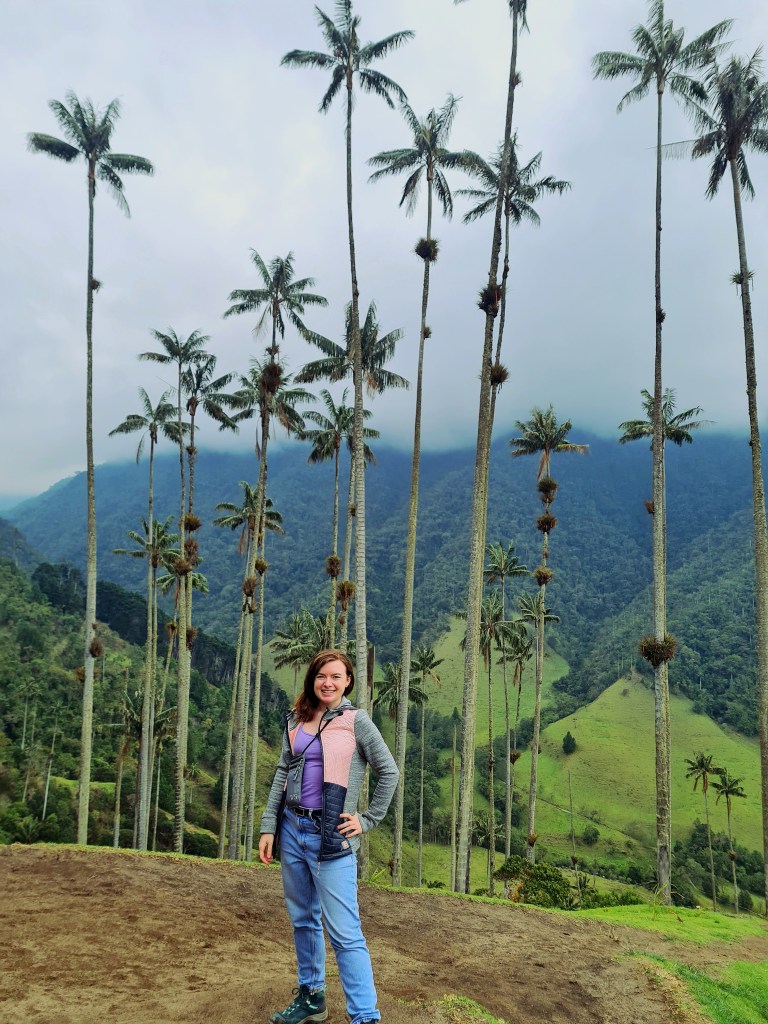
The casita, town and surrounding landscape are said to be inspired by several towns and villages in Colombia, but two of the most beautiful depictions in the film are of the Cocora Valley and Caño Cristales. The first area is iconic for its impressively tall wax palm trees and hiking through this magnificent land has been one of my favourite experiences in Colombia to date. The second is a colourful river found in Colombia and is beautifully represented in the emotional scene of reconciliation between Abuela and Mirabel.
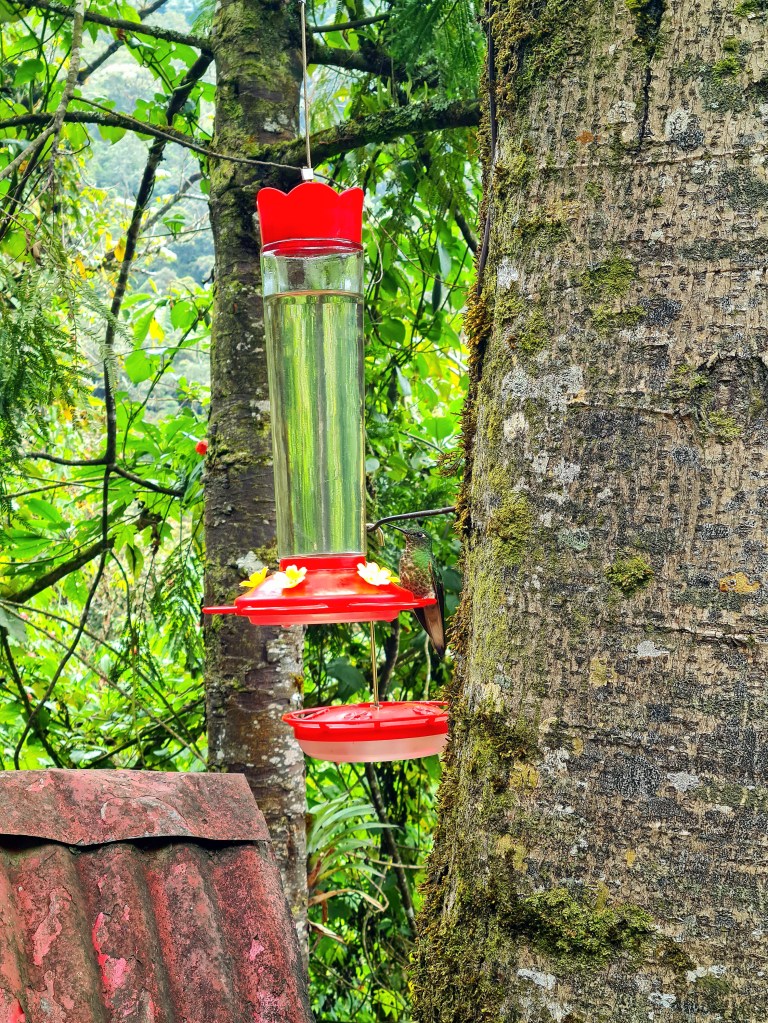
The celebration following Antonio’s ceremony is iconic to any Colombian party. Colombians love to dance along to salsa, bachata and merengue and they know how to do it well. That melody Mirabel’s dad plays on the piano? It’s the intro to a famous song by Colombian singer Joe Arroyo called ‘En Barranquilla me quedo’. Barranquilla, where Shakira is from, is a seaport found in the north of Colombia and Arroyo’s song is almost like an anthem for the city. And whilst Colombians don’t dance amongst wild animals, Colombia is home to the diverse fauna which the film depicts: capybaras, tapirs, toucans, hummingbirds and more.
Mirabel says just one of her mum’s arepas can make you feel better. Even though I’ve not been able to try her magic ones, I do find my day gets a lot better from just eating a regular arepa con queso. And keeping with food, during the tense scene at the dinner table, I was pleasantly surprised to notice the family eating ajiaco, a typical dish from Bogotá containing potatoes, chicken and herbs, served with rice, avocado, corn on the cob and cream. It was one of the first Colombian dishes I tried and is one of my favourites!
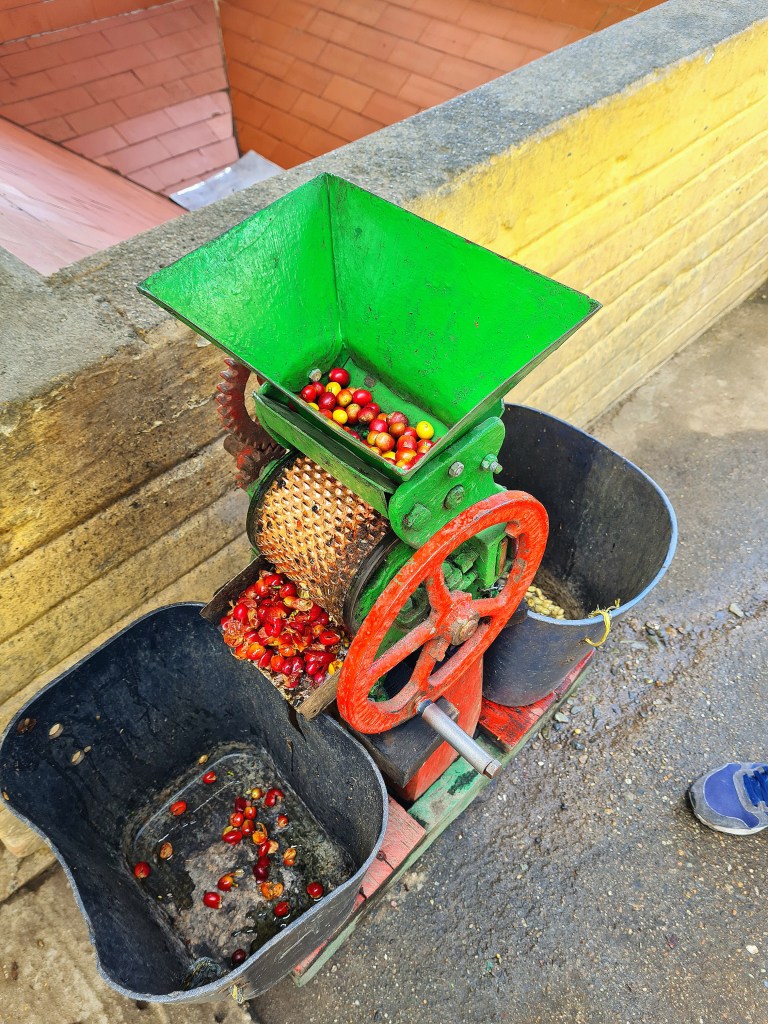
There’s much to be said about the different family member songs, from the superstitious nature of Colombian people (We Don’t Talk About Bruno) to the abundance of plants and flowers found in Colombia (What Else Can I Do?). It wasn’t until after my trip to the coffee farm in Salento that I realised the red beads being squeezed into a funnel in Luisa’s song ‘Surface Pressure’ are actually coffee cherries being mechanically depulped. Subtle but clever!
And perhaps the most beautiful nod to Colombian culture in Encanto is the significance of the candle. In the film, the candle represents the love between Abuela and her late Pedro and holds the miracle gifted to the family after Pedro’s sacrifice. In Colombia, people commemorate Little Candles Day on 7th December. Family members gather to light candles, traditionally to mark the Immaculate Conception, but also to give thanks. They will often light candles in honor of people important to them and they’ll spend the evening with their loved ones.
Encanto is everything I’ve come to love about Colombia: the people, the food, the music, the landscapes, the magic. Unfortunately, when people think of Colombia, the images aren’t so positive. And this isn’t helped by the many films, series and documentaries which elaborate the darker side to the country and feed the perception that Colombia is a dangerous place.
Encanto is an attempt to shift that perspective. It’s a representation of all the beauty and wonder in Colombia. It’s another intepretation of the country and the closest to my own experience here. Through the pictures I share online and and the experiences I recount in my blog, I hope to show friends, family and whoever else might be following the version of Colombia that I know. And if you’re still curious as to what Colombia is like and you haven’t done so already, I highly recommend you watch Encanto.
 Out of the Shell