
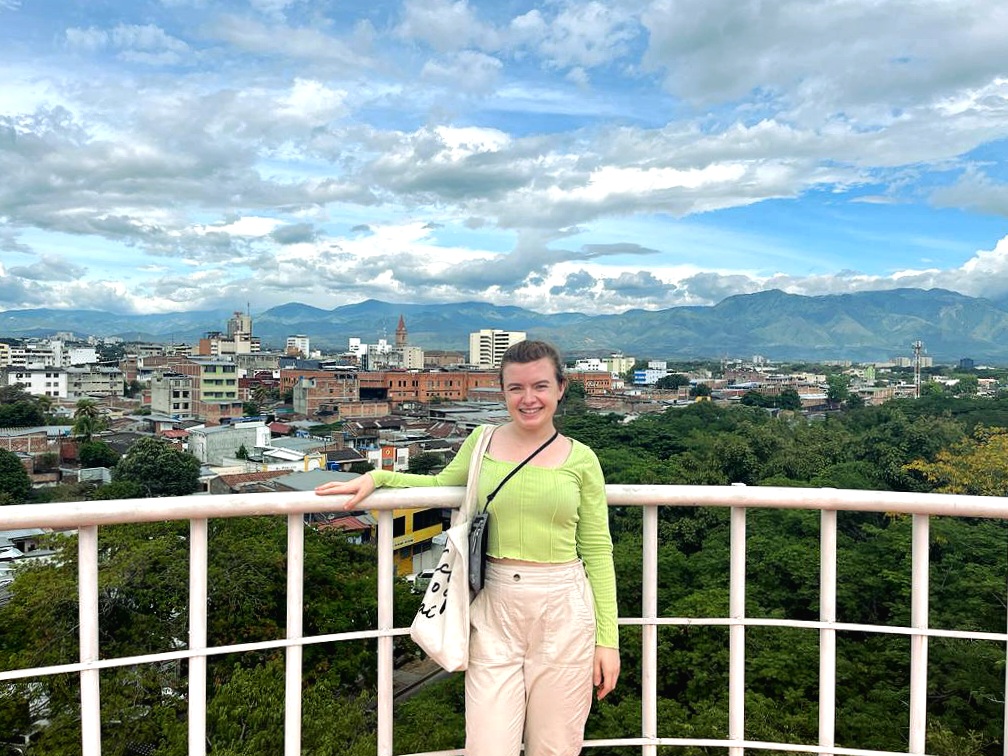
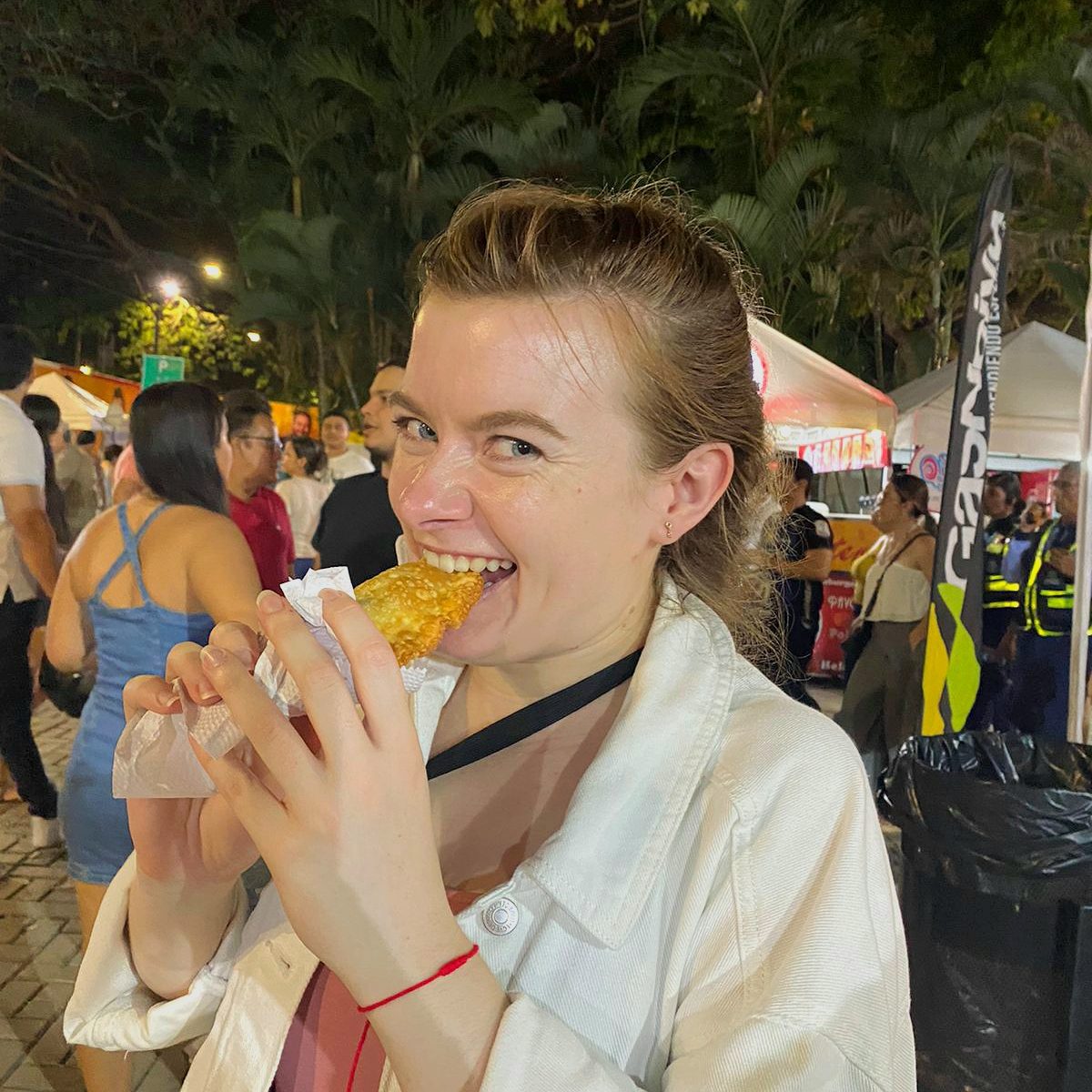
I’m waiting at the kerb, staring down the stream of oncoming traffic. Cars, motorbikes and yellow taxis beep their horns as they soar past, drowning out the noise of the restless cicadas. The city bakes under the morning sun: stallholders slouch under their parasols; motorcyclists careen down the road fashioning their jackets backwards with the sleeves up to their shoulders; pedestrians shield their faces with handbags or folders as they scuttle for shade. Palm trees, eucalyptus and trees bearing almonds, mangoes and jacarandas line the streets in solidarity as street vendors trundle carts of colourful fruit along the pavement. They advertise their produce over megaphones: lulo, granadilla, sapote, soursop, passionfruit, plantain, pitaya and papaya. The smells of meat-packed empanadas and juan valerio balls, sweet choclo arepas and freshly brewed tinto waft over from the other side of the road.
I continue to wait. Motorcyclists sporting a second helmet on their arm – mototaxi drivers – toot as they approach and give me a subtle upward nod. Do you need a lift? I shake my head. No, gracias. I resist the urge to check my phone. Here, the advice is no dar papaya (literally: to not give papaya). Giving papaya is showing that you have something valuable on you – a mobile, jewellery, a watch – and thus making you a target of theft. I’ve never felt unsafe here, but I’m not about to put that to the test.
When I finally see my bus approaching, I wave an assertive arm until the driver starts to slow down. There are no bus stops here; drivers will only stop if they can see you. A rickety mass of steel and bottle green paint judders to a halt before me and its thin doors unfold open. As I climb on the bus, my attention is caught by a milkman leading eight leashed goats along the path. They bleat listlessly as he exchanges a milk bag for coins with a passerby.
The double doors close behind me and I hold tightly onto the metal rail as the bus jerks forward. I hold out a blue note and two silver coins to the driver who expertly collects the fare without so much as taking his eyes off the road. I stumble steadily to the nearest seat and flop myself down. Outside, the motorbikes zip past us, weaving in and out of the vehicles ahead. As the bus jostles forward, we pass row upon row of stout buildings painted like a tropical seafront: pastel orange, avocado green and coffee bean yellow. Already shops and businesses are bustling with people buying groceries, running errands or getting their morning feed. We turn narrowly down the high street where stallholders are selling everything from secondhand books and artisan jewellery to yuca bread and corn on the cob. Goody bags of golden achiras biscuits hang from market stands like prizes at a fairground and merchants call out tantalising offers to curious customers.
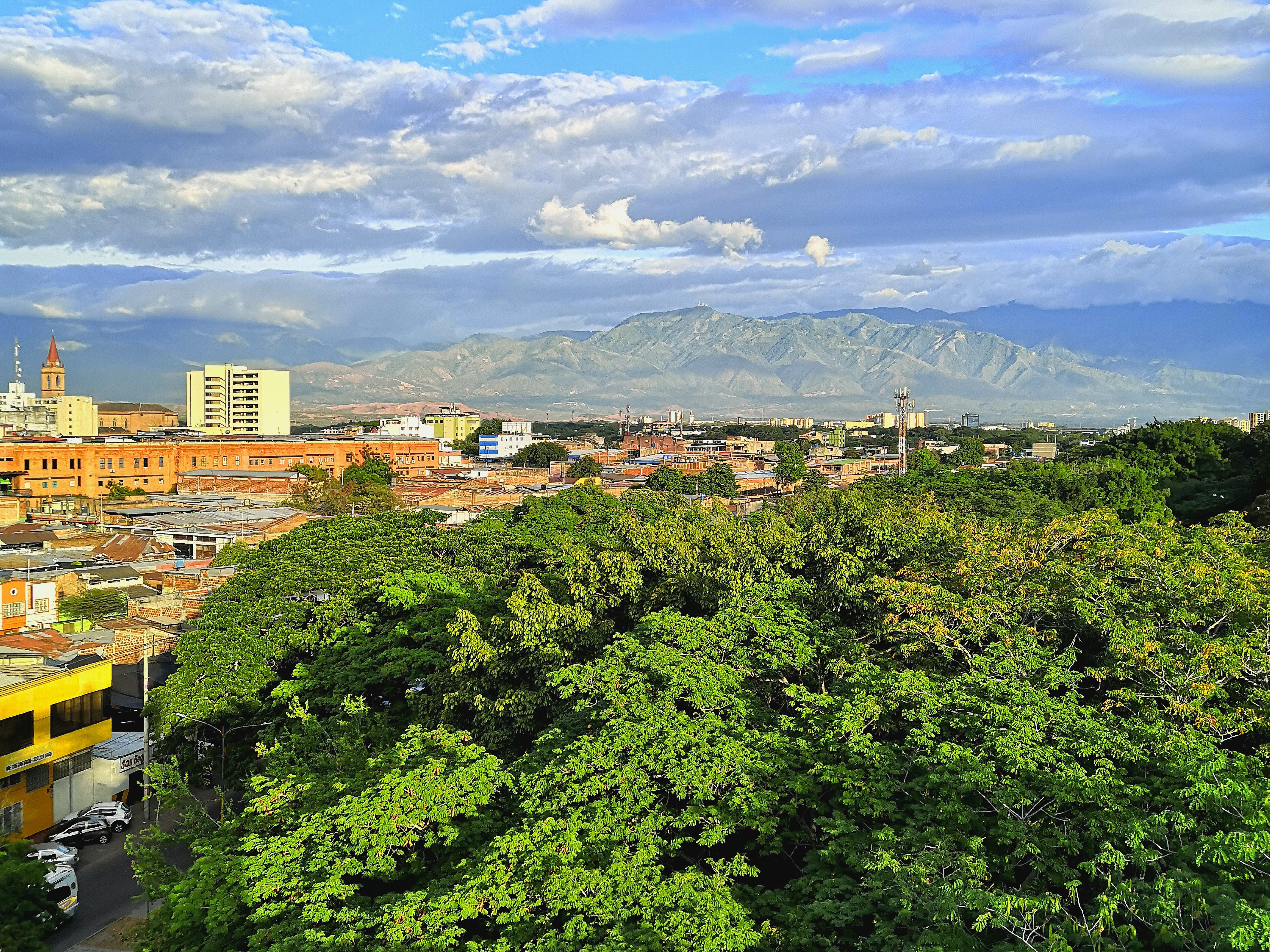
The stop button sounds and an elderly woman rises to her feet. ‘Pere tantico, señor,’ she says to the driver as she carefully descends the bus. Just wait a second. The moment she reaches the pavement, the bus takes off again. We rattle and roll through the city, eventually coming to a wide bridge. As we surge up and over, I get a better view of the Magdalena river, snaking far beyond where my eyes can see. I slowly stand to reach for the red button. Behind the Magdalena lie a series of mountains, still, angular and majestic like an imposing flock of sleeping dragons.
This is Neiva: capital of the Department of Huila, Colombia, and my home for the next year.
But isn’t Colombia dangerous?

Moving to Colombia was hard, but not for the reasons one might immediately think. Before I’d even packed my bags, I was weighed down with the doubts, anxieties and warnings from loved ones and their gynaecologist. Whilst these came from a place of genuine care and concern, very few people took the time to understand why I was so passionate about going. If I was considering going to Colombia, then that apparently meant I wasn’t aware of the risks or the violent history of the country. Never mind the incredible opportunity I’d been given to teach English in a university or the significance of such an experience for a graduate of Hispanic studies; Colombia is branded dangerous.
The handful of people who had constructive or positive feedback were mostly Latinos or people who actually had visited South America and Colombia in particular. Their perspectives were pivotal in my decision-making and had it not been for their more rational advice, I might have lost the nerve to go at all.
This psychological baggage was only exacerbated but the unwarranted commentary on what this decision said about my relationship. It continues to baffle me why anyone would make a negative assumption before the more plausible scenario that two adults could have a healthy conversation about their personal and professional goals and support each other in these individual pursuits. Since when did being a couple mean we no longer have our own identity?
And so, I arrived in Colombia both exuberant that I was fulfilling a bucket-list dream and paranoid that I was making the worst decision of my life. In these past two months, I’ve experienced firsthand how Colombia is not the dangerous country it once was. Colombians are some of the friendliest and most helpful people I’ve ever met and their country is one of the most biodiverse in the world. I’ve eaten fruit I never knew even existed and travelled to some of the world’s most beautiful landscapes. Colombians have many reasons to be proud of their culture and there is a strong sense of wanting to move forwards, to do better. Regretfully there remain some who wish to hold the country back. Whilst it’s easy to point the finger at the groups involved in the current conflict in Colombia, we also can’t forget the tourists who contribute, consciously or not, to the perpetuation of drug trafficking and the monetisation of Pablo Escobar.
Colombia has come a long way from the country many think it to be. And perhaps the greatest harm I’ve encountered in these past two months was when I nearly got pooped on by a 6 ft iguana lounging in a tree. And I don’t recall anyone warning me about that eventuality.
Like kites in the month of August
All decisions come with risks, some greater than others. There are many reasons why you should visit Colombia and why someone like me would want to go especially. My reasons for coming here were thought out and measured, but I realised it was futile trying to defend them against fearmongers. I would just have to go and find out for myself.
And this is exactly what I did on my first solo venture in Neiva. I took a short trip to the shopping centre – to test the waters, if you like. I walked with intention, fair skin covered, gaze down. I remember feeling overwhelmed by the noises and the heat; I was wary of every person, motorbike and vehicle that went past. People had told me to be careful, but of what exactly? Of whom?
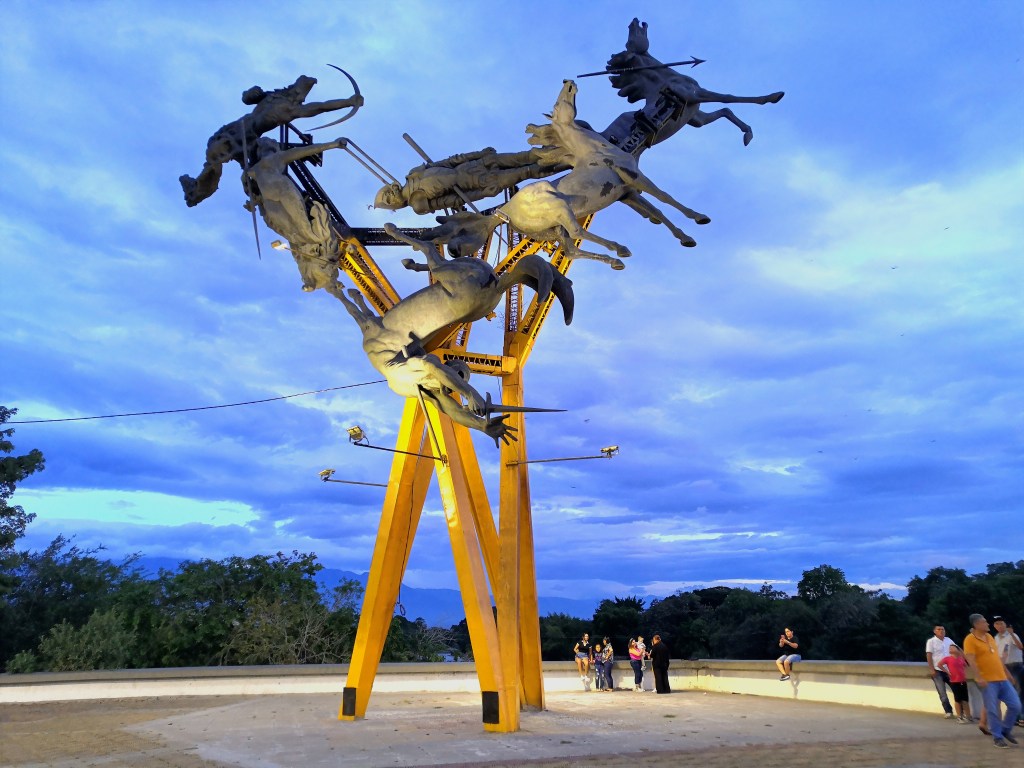
Just when I thought I should turn back, my anxious ruminations were interrupted by the sound of children laughing. There in the field ahead was a congregation of families flying kites. August, it turns out, is kite-flying month in Colombia. The air was filled with childish delight and playful dog barks, and the sky before me was adorned with a kaleidoscope of colours. If the scene had been a canvas painting, I doubt many from my culture would have associated it with Colombia. And yet here it was in a field in Neiva.
I realised then how much I had let the words of others taint my vision – one-dimensional perspectives that didn’t know any better than I did. The world is not monochrome, of course it isn’t, but imagine we listened to those telling us otherwise. I think back to that moment with the kites as a reminder that no situation, no decision, no choice is ever black or white, good or bad. Rather, the world is composed of multiple shades and hues, like a rainbow of kites in the month of August. And what a shame it would be to never go outside and witness them in full flight.
 Out of the Shell